
How do I clean a burnt pan?
To clean a burnt pan, let it cool, identify its cooking surface and start with the gentlest method the manufacturer allows.
Stainless steel, nonstick, enameled cast iron and seasoned cast iron do not share one cleaning method. A treatment suitable for one can damage another.
If the coating is chipped or peeling, stop treating the mark as ordinary stuck food and ask the manufacturer whether the pan should remain in use.
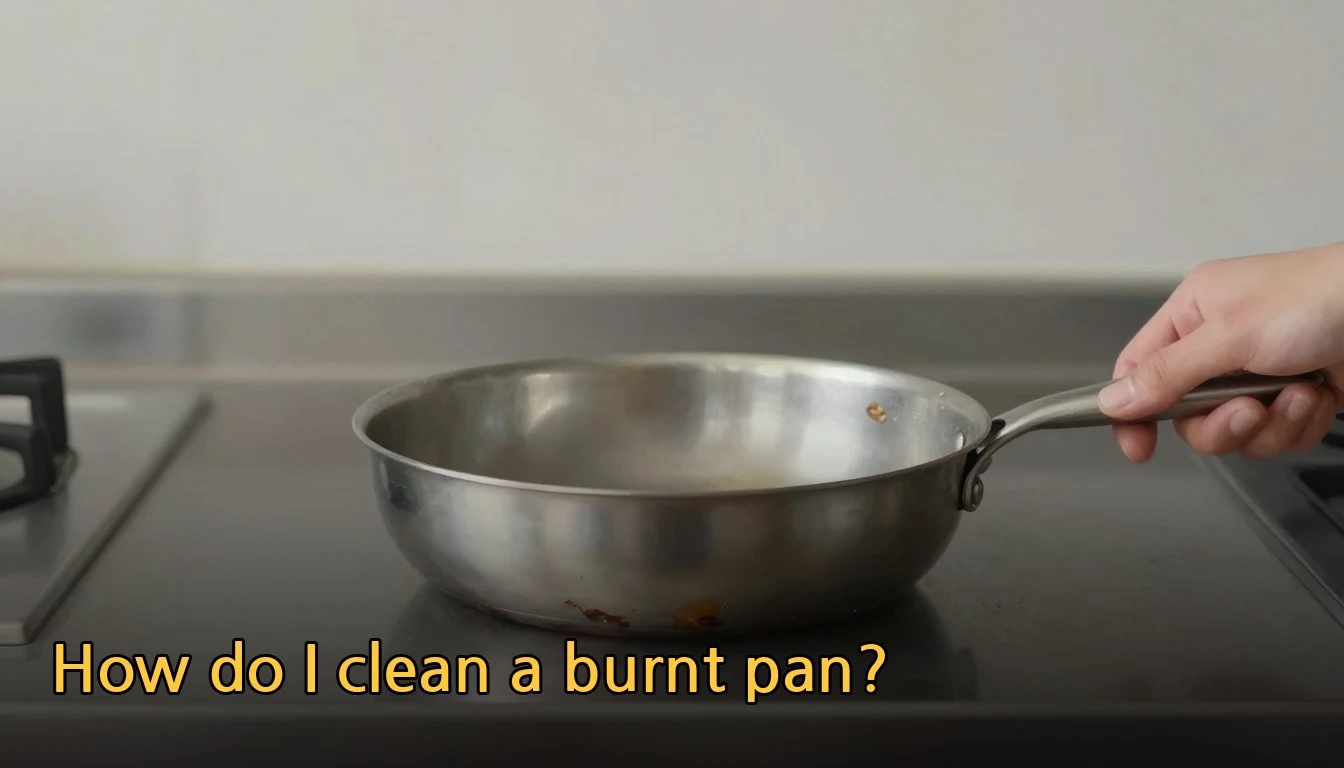
First identify what you are cleaning
A dark interior does not tell you whether a pan is nonstick, seasoned iron or black enamel. Look for the product name or model and find its care instructions. If you inherited the pan or bought it secondhand, a clear photograph of the interior, base and handle may help the manufacturer identify it.
Also separate the cooking surface from the exterior. A product approved for an uncoated stainless-steel interior may not be suitable for a painted base, decorative finish or handle. Read the relevant section of the care guide instead of applying the first cleaning tip you find to every part.
Before starting, move unrelated cleaners away from the sink. Put the selected sponge or cloth beside the pan so you do not reach automatically for a harsher pad halfway through. This preparation makes it easier to follow one appropriate method from beginning to end.
Cool the pan before introducing water
All-Clad warns against placing a hot pan under cold water because it can warp. Le Creuset similarly cautions against sudden temperature changes. Let the cookware cool according to its care instructions rather than rushing a hot pan from the stove into the sink.

Use this pause to decide whether you are dealing with loose food, a stubborn deposit, discoloration or possible damage. Do not test a hot surface with your fingers. Keep the pan somewhere stable and away from anyone who might assume the handle has cooled.
A burnt dinner can make the cleanup feel urgent, but the first useful decision is usually identification. Taking a clear photograph before cleaning can also help if you later need to ask the manufacturer whether a mark is staining or a damaged surface.
For stainless steel, follow the stainless section
All-Clad's stainless-steel guidance begins with cooling, warm soapy water and a sponge or soft cloth. It describes manufacturer-approved approaches for tougher deposits, including a suitable nonabrasive, non-chlorine cleanser. Its instructions also distinguish food residue from rainbow discoloration and hard-water marks.
That distinction matters because a change in color is not the same thing as a thick layer of burnt food. Read the description that matches your pan rather than applying more force to any mark that remains. Follow both the cookware instructions and the cleaning product's directions.
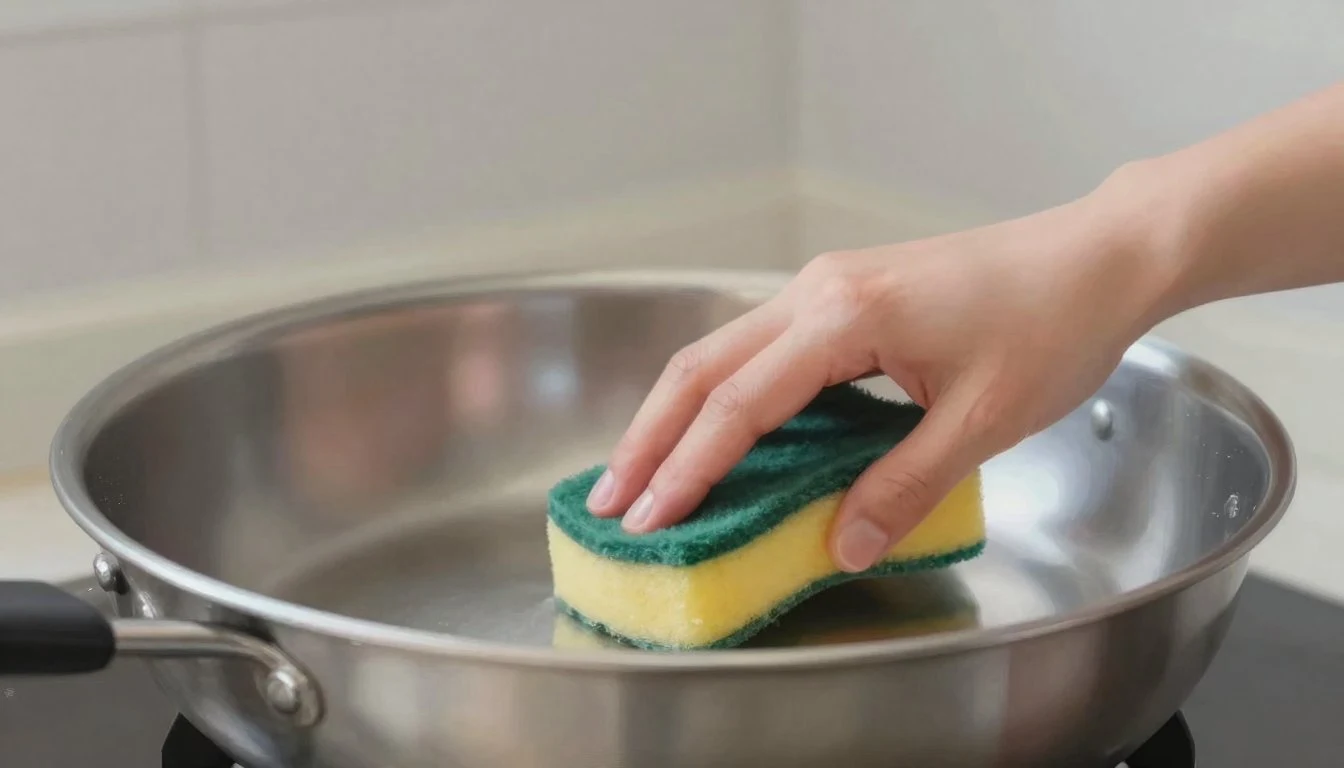
Work with enough light to see whether residue is lifting. If the surface appearance changes in an unexpected way, stop and reassess. Do not turn a small cosmetic mark into a larger scratch by continuing with a tool the manufacturer does not allow.
For nonstick, protect the surface
Le Creuset's nonstick care guidance specifies suitable nonstick cleaning pads and excludes metal or abrasive pads and abrasive cleaners. Its recommendations are product-specific, so check your own pan's instructions before adopting a method from another cookware range.
Use a soft approach to inspect what remains after ordinary cleaning. A patch that looks rough, lifted or missing deserves a different response from food that is visibly sitting on top of the surface. Cleaning cannot replace a missing coating. Ask the manufacturer for a use-or-replace decision when you cannot distinguish residue from damage.
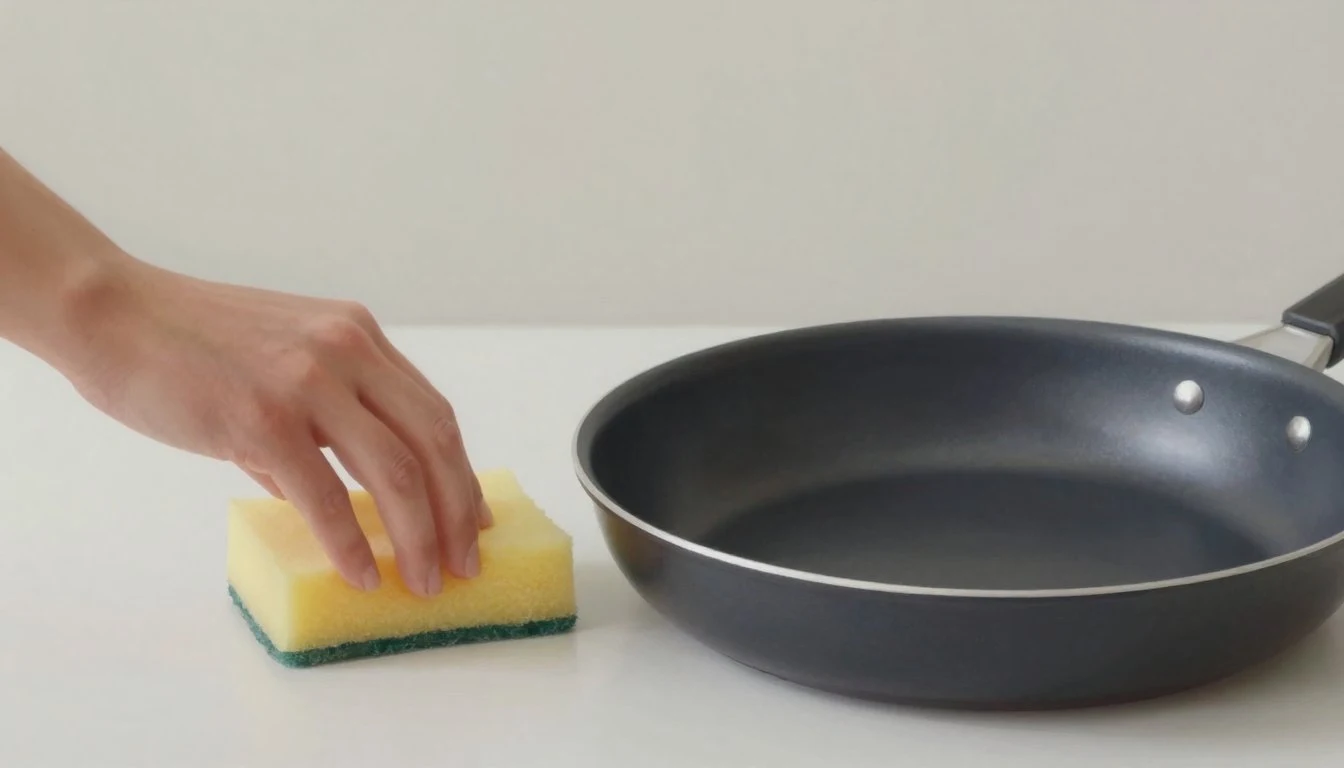
Keep any sharp scraper out of the process unless your exact care guide explicitly permits it. A tool sold for cookware may still be intended for a different surface. The label “kitchen scrubber” is not enough information to decide that it belongs on a nonstick coating.
For enamel, check for damage before scrubbing
Le Creuset's enameled cast-iron guidance calls for cooling before cleaning and describes soaking or gentle cleaning for stuck food. Its care instructions also say not to use a product with chipped interior enamel. Do not treat a chip as a stain that can be polished away.
For an intact surface, follow the cleaning sequence for that product, including the permitted cleaner and tool. If a home remedy involves heating a mixture, verify it against the manufacturer's instructions instead of assuming it is safe because its ingredients are common in a kitchen.
Photograph the dry interior if you are contacting support. Explain what food burned and what cleaning method you have already tried. A concise description of the sequence is more useful than listing unrelated remedies you found online.
Seasoned cast iron has a different finish
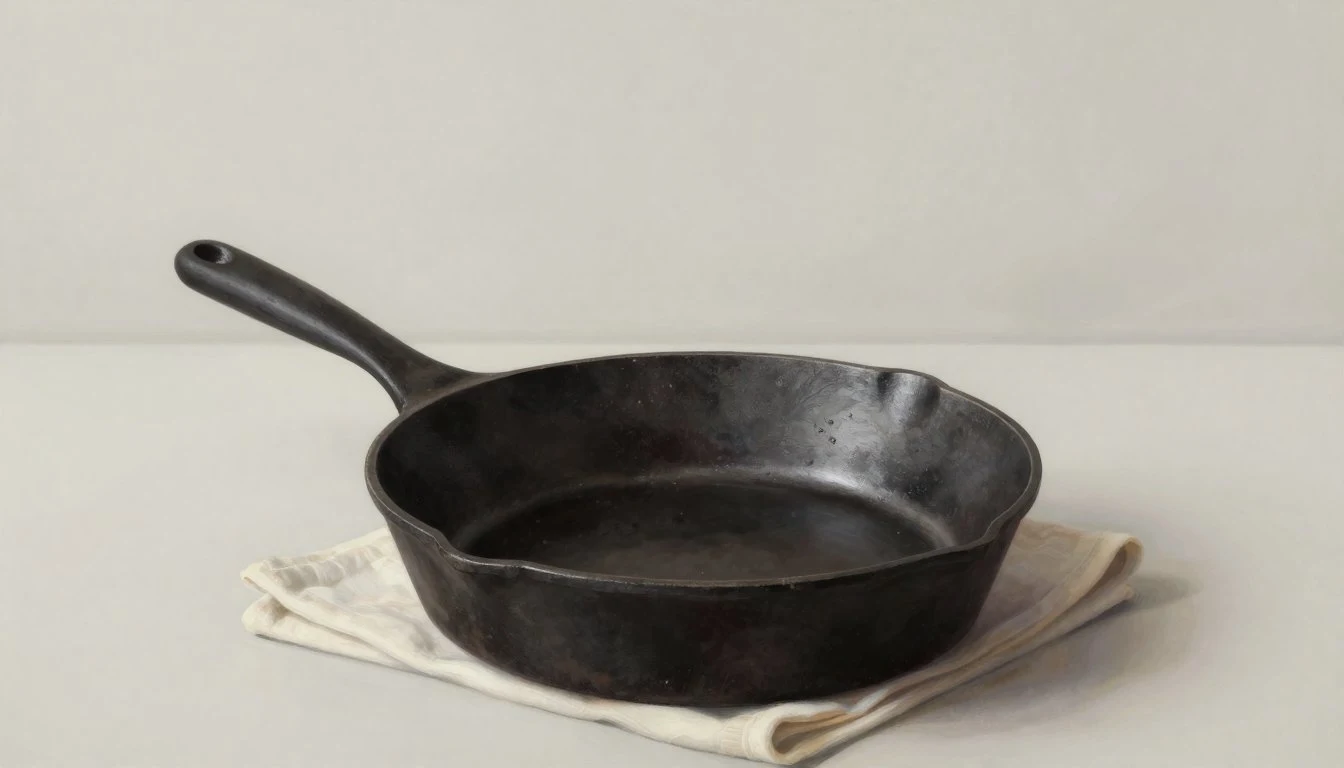
Lodge's care instructions for seasoned cast iron allow hand washing and a small amount of soap, followed by thorough drying and a light oil layer. The company warns against soaking seasoned cast iron. This is different from treating a pan as a container that can sit in a sink of water indefinitely.
Make sure the pan is actually seasoned iron before following that advice. An enameled surface is a different finish even when the underlying material is cast iron. If the maker identifies rust or seasoning damage, use its restoration instructions rather than improvising from a routine washing guide.
Finish the job with a clear stopping point
After the permitted cleaning method, rinse and dry as directed and inspect the surface again. If residue remains, return to the manufacturer's next step. Avoid combining several cleaners or switching tools simply because the first attempt was not dramatic.
Store the care-guide link with the product name so the next cleanup starts with the right instructions. You do not need a separate collection of cleaning products for every stain; you need to know which methods the particular pan can tolerate.
Frequently asked questions
Can I use the same burnt-pan trick on every pan?
No. Match the method to the material and coating, then check the manufacturer's care guide.
Should I scrub harder if a dark mark remains?
First decide whether it is food, discoloration or damage. More pressure is not a substitute for that distinction.
Can cleaning repair a chipped coating?
No. Stop and obtain the manufacturer's advice about further use rather than trying to scrub the damaged area smooth.
Everyday Useful helps you choose a cleaning method that fits the object in front of you.
Sources
- All-Clad: Use and Care — stainless-steel cleaning and cooling precautions.
- Le Creuset: Care and Use — nonstick surfaces and damaged enamel.
- Le Creuset: Cleaning Enameled Cast Iron — stuck-food care.
- Lodge: Seasoned Cast Iron Cleaning and Care — washing, drying and oiling.

댓글
댓글 쓰기